
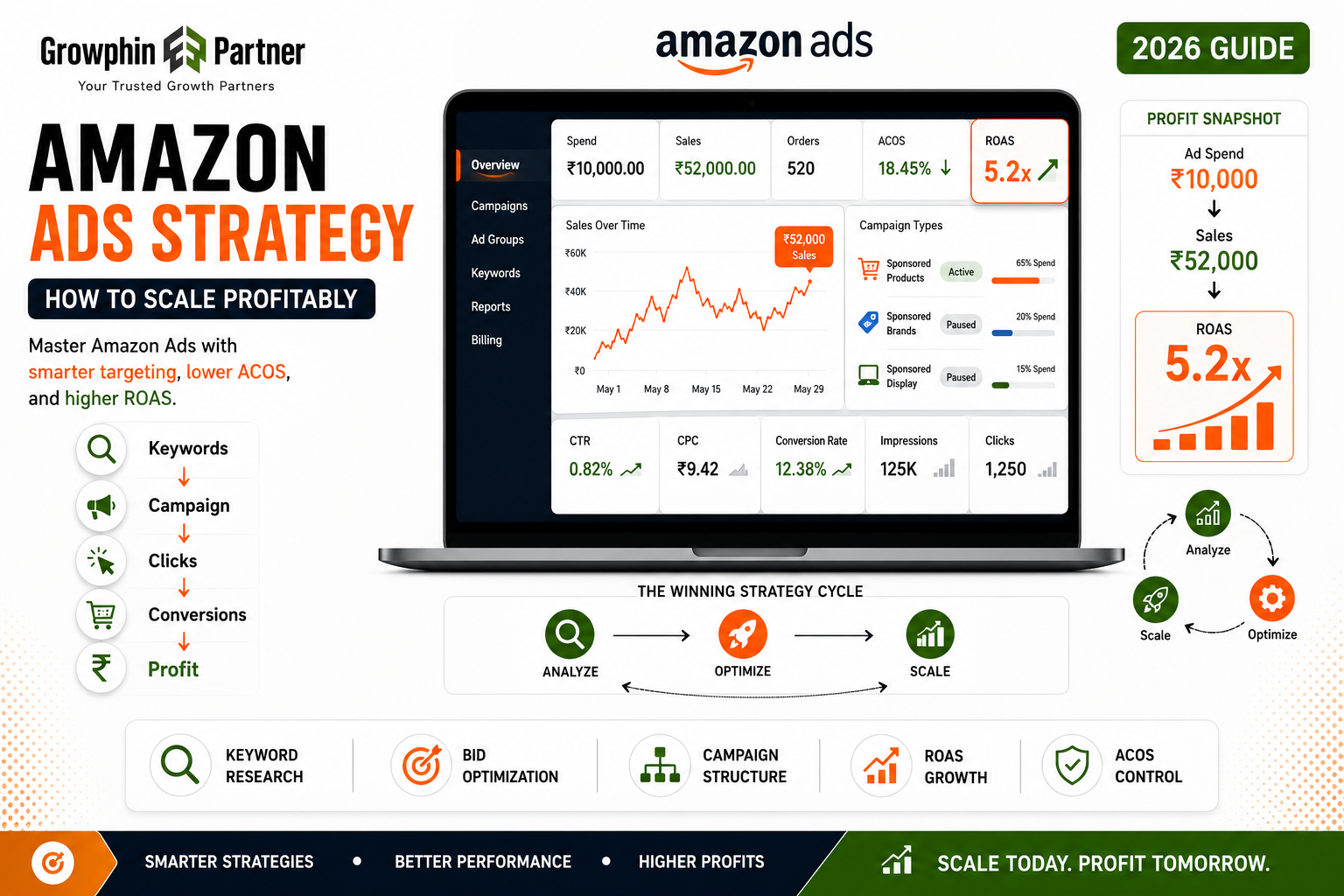
Running ads on Amazon looks simple on the surface. You create a campaign, pick keywords, set a budget—and expect results.
But in reality, it rarely works that smoothly.
Some campaigns perform well, others burn money without clear reasons. The difference usually isn’t luck. It comes down to how the ads are handled over time.
If you want to scale profitably, you need to look beyond just running ads. You need a system that connects everything together.
Start With a Strong Base Before Spending
A lot of sellers jump into ads too early.
They assume ads will “fix” their sales problem. But ads don’t fix weak listings—they expose them.
Before spending money, check:
- Is your product page clear?
- Are images strong enough?
- Does the description make sense quickly?
If not, fix that first. Otherwise, you’re just paying for traffic that won’t convert.
This is where improving your product listing optimization (👉 internal link) makes a real difference.
Pick One Campaign Type and Learn It First
Amazon gives multiple ad formats. It’s tempting to try everything at once—but that usually creates confusion.
A simpler approach works better:
- Start with Sponsored Products
- Understand how it behaves
- Then expand later
Trying to do too much at once often leads to scattered results.
Not Every Keyword Deserves Your Budget
More keywords don’t mean better performance.
In fact, too many keywords can dilute your results.
Focus on:
- Specific search terms
- Buyer-intent keywords
- Phrases closer to purchase decisions
These may have lower traffic, but they often convert better.
Control Your Budget Early On
One of the easiest mistakes is scaling too fast.
You see clicks coming in, maybe even a few sales, and increase budget quickly.
But that can backfire.
Instead:
- Start with a limited budget
- Watch how it performs
- Increase slowly
This gives you control and reduces unnecessary loss.
Don’t React Too Quickly to Data
It’s normal to check campaigns daily. But reacting daily? That’s where things go wrong.
Ads need time.
If you keep changing things too often:
- You reset learning
- You lose consistency
- Results become unpredictable
A better approach is to watch trends over a few days, not hours.
Fix Conversion Before Scaling Ads
If people click but don’t buy, ads are not the issue.
Something else is off.
Usually:
- Pricing doesn’t match expectations
- Listing isn’t clear
- Product positioning feels weak
Fix these first. Otherwise, scaling ads just increases losses.
Use Data, But Keep It Simple
You don’t need complex dashboards.
Even basic numbers help:
- Click-through rate
- Conversion rate
- Cost per click
These already tell a story.
If clicks are high but sales are low → listing issue
If clicks are low → visibility issue
Keep it simple and act accordingly.
Avoid Patterns That Drain Budget
Some mistakes repeat across many sellers:
- Running ads without checking listing quality
- Targeting too many keywords at once
- Ignoring poor-performing campaigns
- Increasing budget based on clicks alone
Individually, they seem small. Together, they create losses.
Ads Should Support Growth, Not Replace It
Ads are powerful—but they’re not everything.
Long-term growth still depends on:
- Strong listings
- Good reviews
- Consistent performance
If ads become your only strategy, scaling becomes risky.
To connect everything properly, it helps to understand ecommerce account management (👉 pillar blog).
Scale in Steps, Not Jumps
Once something works, it’s tempting to push hard.
But sudden scaling often breaks performance.
A steadier approach:
- Increase budget gradually
- Expand keywords slowly
- Test before committing
This keeps things stable while still growing.
Keep Testing Without Overcomplicating
There’s no fixed “perfect” campaign.
What works now might change later.
So keep testing:
- New keywords
- Slight bid changes
- Small variations
No need to overthink it. Just keep improving step by step.
Stay Consistent With Your Approach
Consistency beats aggressive changes.
Instead of jumping strategies:
- Follow a cycle → test, observe, adjust
Over time, this builds a system you can rely on.
The Bigger Picture
Amazon ads are not just about running campaigns. They’re about building a structure that works repeatedly.
When your listing is clear, your targeting is focused, and your decisions are steady, results become more predictable.
There’s no shortcut here. But there is a process—and once you follow it properly, scaling becomes much easier.
Frequently Asked Questions
1. Do Amazon ads always bring sales?
No. They bring traffic. Sales depend on your listing and pricing.
2. Which campaign type is best to start?
Sponsored Products are usually the simplest starting point.
3. Why am I getting clicks but no conversions?
Most likely a listing or pricing issue, not an ad problem.
4. How fast should I scale ads?
Slowly. Gradual scaling is more stable and safer.
5. How often should campaigns be optimized?
Regularly—but not too frequently. Let data settle first.