
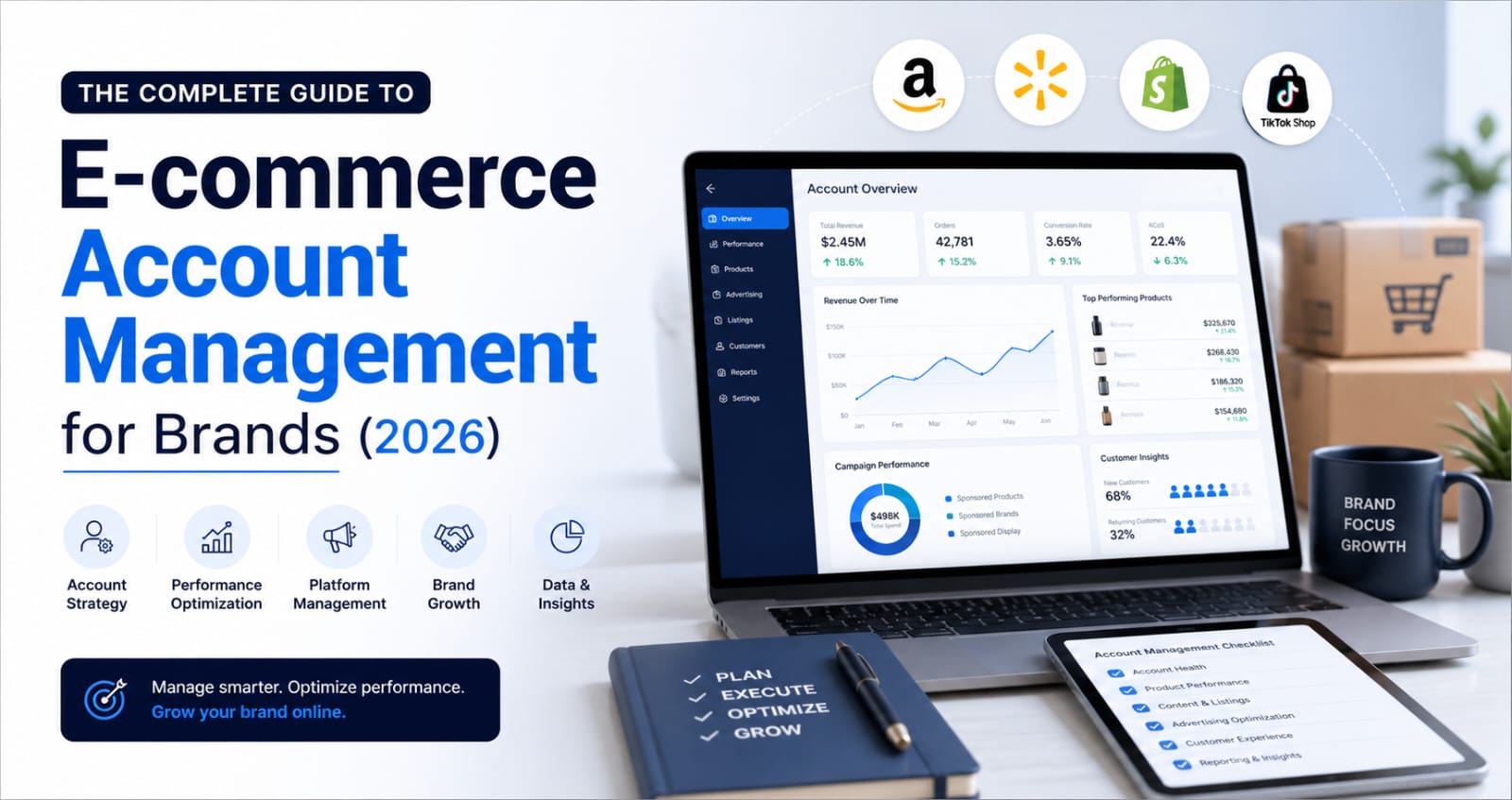
Running an online store today looks easy from the outside. Upload products, set a price, wait for orders. Simple.
But once you’re actually inside it, things feel different.
Sales go up, then slow down. Ads work one week, stop the next. Some products perform well, others just sit there. It’s not random—there’s usually a reason behind it.
That’s where ecommerce account management starts to matter. Not as a single task, but as a system that keeps everything working together.
What Managing an E-commerce Account Really Looks Like
It’s not one job. It’s a mix of small things done regularly.
On most days, it includes:
None of these feels big on its own. But when ignored, they stack up.
- Checking product performance
- Updating listings here and there
- Watching inventory levels
- Adjusting prices
- Responding to customers
That’s why many brands turn to structured account management services—not because they can’t do it, but because consistency is hard to maintain.
Why Growth Slows Down Without Warning
This happens more often than people admit.
A store starts well. Orders come in. Then suddenly… things feel stuck.
Usually, it’s not one big problem. It’s a mix of small ones:
- Listings get outdated
- Pricing doesn’t match the market anymore
- Data is there, but not used
- Customer experience becomes inconsistent
A solid online store management approach helps catch these early—before they affect results.
Product Listings: Where Decisions Actually Happen
Your product page does most of the selling.
If something feels unclear, people leave. They don’t analyze it—they just move on.
Good listings don’t try to sound impressive. They try to be clear.
- What is the product?
- Who is it for?
- Why should someone buy it?
That’s enough, most of the time.
If you want to go deeper into this, you can explore the Product Listing Optimization Guide (👉 internal link).
Pricing Isn’t Static (And Shouldn’t Be)
A lot of sellers set a price and forget it.
That works for a while. Then things change.
Competitors adjust. Demand shifts. Customer expectations move.
So pricing needs attention—not daily, but regularly.
- Watch the market
- Make small changes
- Keep margins in mind
Even small adjustments can affect performance more than expected.
Inventory Problems Don’t Always Show Immediately
Inventory issues are quiet at first.
Then suddenly:
- You’re out of stock
- Or holding too much inventory
Both affect growth, just in different ways.
A simple system usually works best:
- Track what sells consistently
- Keep a small buffer
- Plan ahead (even basic planning helps)
For a deeper look, check the Inventory Management for E-commerce Guide (👉 internal link).
Ads Work Better When Everything Else Works
Ads can bring traffic quickly. That part is true.
But they don’t fix weak pages.
If your listing or pricing feels off, ads just bring more people to see that problem.
A better approach:
- Fix the basics first
- Then run campaigns
- Scale slowly
If you want a detailed breakdown, the Amazon Ads Strategy Guide (👉 internal link) explains this step by step.
Managing Amazon Requires Extra Attention
Amazon is not like a regular store.
It has its own system. Its own rules.
Strong amazon account management services usually focus on:
- Account health
- Listing quality
- Ad performance
- Policy compliance
Small mistakes here can have a bigger impact than expected. So regular checks matter.
Data Helps—But Only If You Use It
Most sellers have data. Not everyone uses it properly.
You don’t need complicated tools.
Just basic things:
- Which products convert
- Where traffic comes from
- What customers click
Even this level of insight can guide better decisions.
That’s a core part of ecommerce account management—not guessing, but adjusting based on what you see.
Customer Experience Still Makes a Difference
People don’t always remember what they bought.
But they remember how it felt.
- Was delivery clear?
- Was support helpful?
- Was the process smooth?
These small things matter more than expected.
Good experience builds trust. And trust brings repeat buyers.
When Growth Stops, Look at the Basics First
If sales slow down, it’s tempting to try something new.
But often, the issue is already there.
Check:
- Listings
- Pricing
- Traffic quality
Usually, the answer is somewhere in these.
If you want a deeper breakdown, read Why Your E-commerce Store Is Not Growing (👉 internal link).
Tools Help—But They Don’t Replace Thinking
Automation tools are useful. No doubt.
They help with:
- Tracking
- Reporting
- Inventory
But they don’t decide.
Strategy still needs human input.
The best results usually come from combining both.
Building Something That Can Actually Scale
Scaling isn’t about doing more. It’s about doing things better.
A simple structure helps:
- Clear processes
- Regular checks
- Small improvements
Nothing complicated. Just consistent.
What’s Changing in 2026
The way people shop keeps evolving.
Some patterns are becoming clearer:
- Faster delivery expectations
- More personalized experiences
- Better product discovery
- More automation behind the scenes
Adapting early gives you an edge, even if it’s small.
Choosing How You Want to Manage Your Store
There’s no single right way.
Some brands manage everything in-house. Others prefer external help.
It usually depends on:
- Time
- Budget
- Experience
What matters more is how consistently things are handled.
The Bigger Picture
E-commerce growth doesn’t happen all at once.
It builds slowly. Step by step.
A well-managed store feels stable. Fewer surprises. Better control.
Instead of chasing quick wins, steady improvements tend to work better.
That’s what separates stores that grow from those that stay stuck.
FAQ SECTION
Frequently Asked Questions
1. What does ecommerce account management include?
It covers daily operations like listings, pricing, inventory, and improving overall store performance.
2. How often should I review my store?
Regularly. Weekly or bi-weekly checks usually help maintain stability.
3. Do I need amazon account management services?
Not always. But if you lack time or experience, it can help avoid common mistakes.
4. Why is my store not growing?
Usually because of small gaps—like weak listings, pricing issues, or poor tracking.
5. What matters most in the long run?
Consistency. Small improvements over time make the biggest difference.